

When you speak with Holly Ranta, her bright personality fills the conversation.
Ask her about what makes a great day, and she’ll talk with genuine excitement about her hobbies: creating diamond art, building LEGO® sets, completing word searches, playing cards, painting ceramics, and hand-crafting fleece tie blankets to donate.
She also loves turning important memories into photo books, especially for Alex, her boyfriend of 15 years.
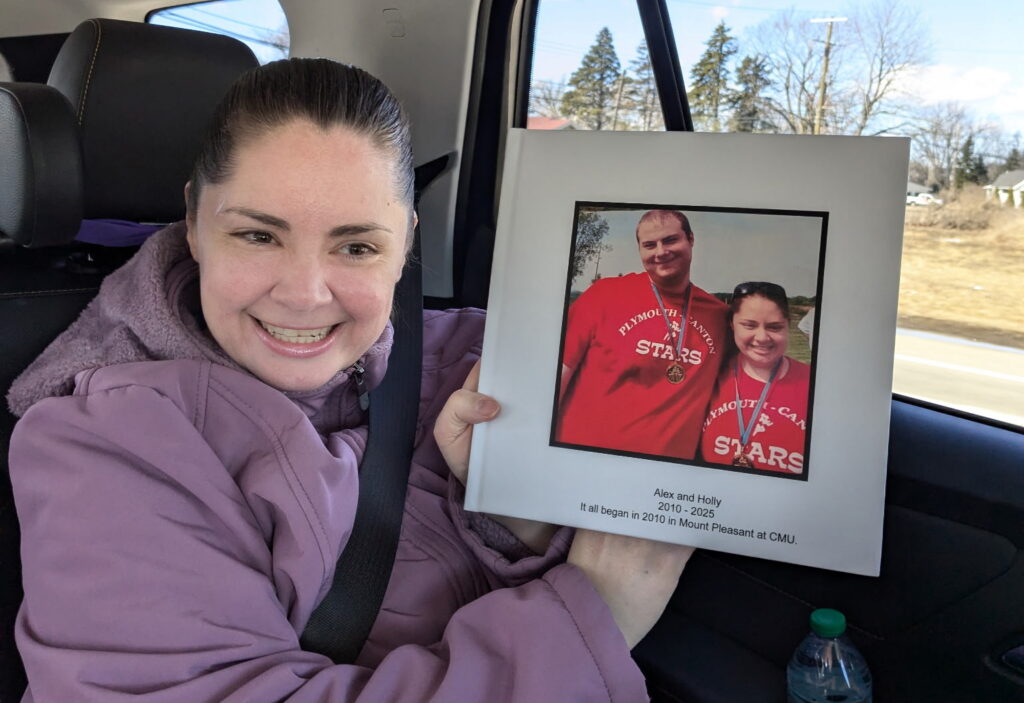
Ask her about what makes a perfect day, though, and the answer comes instantly: a day centered around dance. Holly takes ballet and jazz classes, as well as tap and hip-hop, and she recently landed a role in her studio’s Christmas Spectacular—a Rockettes-style show in Canton, MI.
“Holly is joyous,” her mother, Judy, reflects. “She is happy all the time. She is smart as a whip… and I’ve been most proud of the fact that she is dedicated and determined… to enjoy life and to be kind.”
That determination has shaped the life Holly and Judy have built, including their decision to use self-direction to have more choice in Holly’s support and how it fits into her life. Today, Holly is a Participant with PAS, one of the trusted programs within the AssuranceSD family.
But getting to this point has not been easy. Behind Holly’s radiant joy and determination, however, is a remarkable story of resilience.
Early Life, Education, and Lennox-Gastaut Syndrome
Holly lives with Lennox-Gastaut Syndrome (LGS), a rare form of epilepsy estimated to account for only 1 to 2 percent of all epilepsy cases.
“[It’s] the second hardest type of seizure to control,” Holly shares.
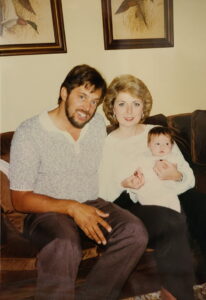
Judy learned early on how much depended on recognizing danger in time. Holly experienced her first seizure the very day she arrived home, at just nine weeks old.
Over the years, Holly has experienced at least 10 types of seizures. After numerous EEGs, MRIs, and PET scans, doctors have described her seizures as “too numerous to count.” Her seizures can be triggered by lights, sounds, and even certain smells.
Since then, Judy has learned to constantly watch for falls, keep emergency medication close, and prepare for seizures wherever they go.
Holly’s severe allergies demanded that same level of vigilance. She has experienced anaphylactic shock about six times in her life, and eating peanuts can be fatal for her.
At daycare, Holly was once served peanut butter despite warning notes posted on the walls, sending her into anaphylactic shock after school.
“They just forgot [about her allergy], I guess,” Judy recalls. “It wasn’t intentional at all or neglectful at all. It was a poor teacher who was probably busy and didn’t remember on that particular day.”
As Holly grew older, Judy also had to advocate for dangers that were far less visible. While some seizures were obvious, others were easy to miss. Judy remembers teachers insisting that Holly hadn’t had any seizures in class.
“Well, yes, she does,” Judy would answer. “We only see the tip of the iceberg.”
A brief flutter of Holly’s eyes could easily go unnoticed in a busy room, leaving her to catch up on lessons she had missed during those quiet moments. Other seizures could leave entire stretches of time missing.
Holly would wake up in the hospital believing she should still be at school.
“She would say, ‘Why am I here? I’m supposed to be taking a test. I’m supposed to be taking an English test, math test, science… Why am I here?’” Judy remembers. “It’s like she didn’t even know what happened. She’s in one spot one moment, and [in] another spot [the next].”
Judy, a former teacher and principal, was determined to help her daughter navigate those disruptions. Holly had one-on-one support during the school day, and Judy reviewed lessons with her at home.
“She didn’t really have a chance to slip off in school,” Judy laughs. Then, on a more serious note, she adds, “[Holly] had to work three times as hard as a normal student, in my opinion.”
But Judy also made sure Holly didn’t miss out on high school milestones. On Senior Skip Day, she went from classroom to classroom herself to confirm it was a real event so Holly’s absence wouldn’t count against her.
That shared dedication paid off. Holly maintained a 3.8 GPA and was a member of the National Honor Society in both high school and college.
Twelve Years On Pause
Holly has had as many as 41 “grand mal” seizures in a single year. Now called tonic-clonic seizures, these episodes can cause a person to lose consciousness as their body stiffens and jerks.
A sudden fall could seriously hurt Holly.
“I’ve literally had to follow her around the house from room to room every time she got up for the last 37 years,” Judy recalls. “She’s had some serious falls where she’s fractured her ankle, and she’s broken her fingers and her arm.”
Finding medication that worked for Holly was a long process. Judy says Holly had been prescribed 27 medications over 37 years that were wrong for her.
By 2012, Holly’s doctors had reached what Judy remembers as their last available solution. “There were no more options,” she says, “so we had to put her on a medication called Clobazam.”
Clobazam is a benzodiazepine, a type of medicine used to help control seizures. It can also cause severe drowsiness and sedation.
Judy remembers Holly’s experience in stark terms: “Holly was actually non-functional for almost 12 years, where she would be laying in bed for months and couldn’t talk, couldn’t walk. I would read to her [and] I didn’t know if she was even hearing me.”
Asked if she remembers that time, Holly says, “Vaguely, very, very vaguely, just from what my mom is telling me.”
Judy still tried to bring Holly into the activities she loved. She recalls taking her to a Special Olympics softball game in a wheelchair, where someone placed a plastic bat in Holly’s hand. Holly couldn’t even attempt a swing at the ball.
For a mother who knew Holly’s determination and enthusiasm, those years were heartbreaking.
“We got to the point where we didn’t think there was hope.”
When Judy Needed Help, Too
In 2015, Judy’s husband, Holly’s father, was diagnosed with cancer. He had served in Vietnam and was exposed to Agent Orange while building roads. Veteran’s Administration (VA) doctors confirmed this extremely rare type of soft tissue sarcoma he developed decades later. His illness would require multiple surgeries, while Holly still needed Judy close by to watch for seizures and falls.
Until then, Judy had never asked a community organization for help with Holly’s care. But after the hospital appointment where she learned of her husband’s diagnosis, she went straight to a meeting with Community Living Services in Michigan.
“I remember I could hardly even talk. I was in tears, and I was asking for help,” Judy recalls. “I said, ‘I know I need help.’”
Years later, during the COVID-19 pandemic, her husband needed surgery in Ohio. Judy had about five hours’ notice to get him there.
“I had to suddenly leave Holly with one of my sisters who wasn’t familiar with her seizures,” she says.
What began as an emergency trip stretched to 44 days. While Holly was staying with her aunt, she experienced tonic-clonic seizures and choked on chicken, prompting her aunt to call 911.
Judy’s sisters stepped in during a frightening time for the whole family. They also helped at home as doctors, nurses, and social workers came to see her husband during the pandemic.
Judy was grateful for the love and care her family provided, but the emergency showed her how much Holly’s care depended on having someone else who knew what to do.
When Judy’s husband died in 2020, she realized just how much she needed Direct Care Workers to come in and help.
The Return of Ordinary Days
For years, Judy kept looking for a treatment that would help Holly’s seizures while allowing her to take part in daily life. Around 2024, Holly began taking newer medications that Judy says are still working for her.
Judy understands the change partly through how the medicines work. “These new medicines are going after a particular protein in Holly’s brain that they didn’t know about back then,” she explains.
The difference shows up in Holly’s plans. “I am able to go places, do things, keep appointments, keep schedules,” she says. She can see family and friends. Asked whether the medication helped make that possible, Holly answers, “Yes, that’s with the medication.”
“Two years now, we’ve had some normalcy,” Judy says.
Holly still has seizures, and Judy still prepares for them. But after years of living in a fog, Holly can once again look forward to games, dance classes, and time with the people she loves.
People Holly Knows and Trusts
Alongside the change in Holly’s treatment, self-direction has helped Judy build a team around her daughter. Holly currently has three Direct Care Workers, and Judy knows each person who comes into their home. That trust matters when a seizure may require emergency medication or someone needs to help Holly with personal care.
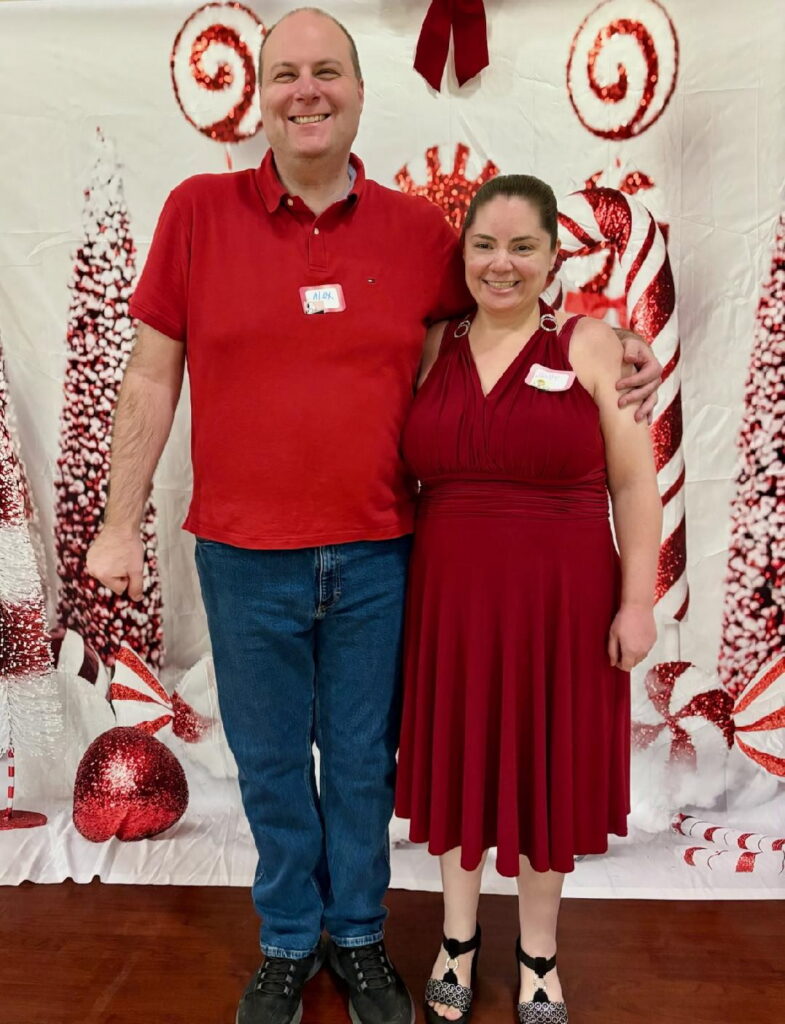
“I have to know the person and trust the person with my child before I’ll leave my daughter with anyone,” Judy says.
The relationships matter to Holly, too. She first got to know one Direct Care Worker, Sharon, when they were in high school. Another, Bernice, is a longtime friend of Judy’s and a former nurse.
“I love them all,” Holly says of her support team.
Having someone Holly knows beside her makes a difference in everyday situations.
At a large Special Olympics event, Judy can drop Holly and a Direct Care Worker at the team’s meeting place, then find parking and bring in their chairs, coolers, and other supplies.
Making Room to Help Others
For years, Judy’s ability to leave home depended on finding someone who understood Holly’s needs. With Direct Care Workers in place through self-direction, Judy can now attend meetings and put what she has learned to work for other families.
Judy is involved with the Plymouth-Canton Special Olympics community. She says several families in the group have lost a parent, and she knows firsthand how difficult it can be to navigate benefits and care while grieving.
After her husband died, Judy had to navigate that paperwork for Holly. “[It’s] excruciating,” she adds.
Now Judy helps other families work through it and find Direct Care Workers of their own. The help she once struggled to ask for has given her time to sit beside other parents and spouses facing their own daunting stack of forms.
“What [self-direction] allows me to do is help other families who are going through situations like ours.”
Giving back matters to Holly, too. Although her health conditions have kept her from working a regular paying job, she loves to volunteer with Vacation Bible School at her church. She and Judy also shop and cook for the church’s funeral ministry, and recently helped pack food for people in need at Forgotten Harvest.
Looking Forward With Hope
Thanks to the new medication and self-direction, Holly has a full calendar again. Alongside dance and her creative projects, she plays basketball, bowls, and competes in softball and soccer with Special Olympics.
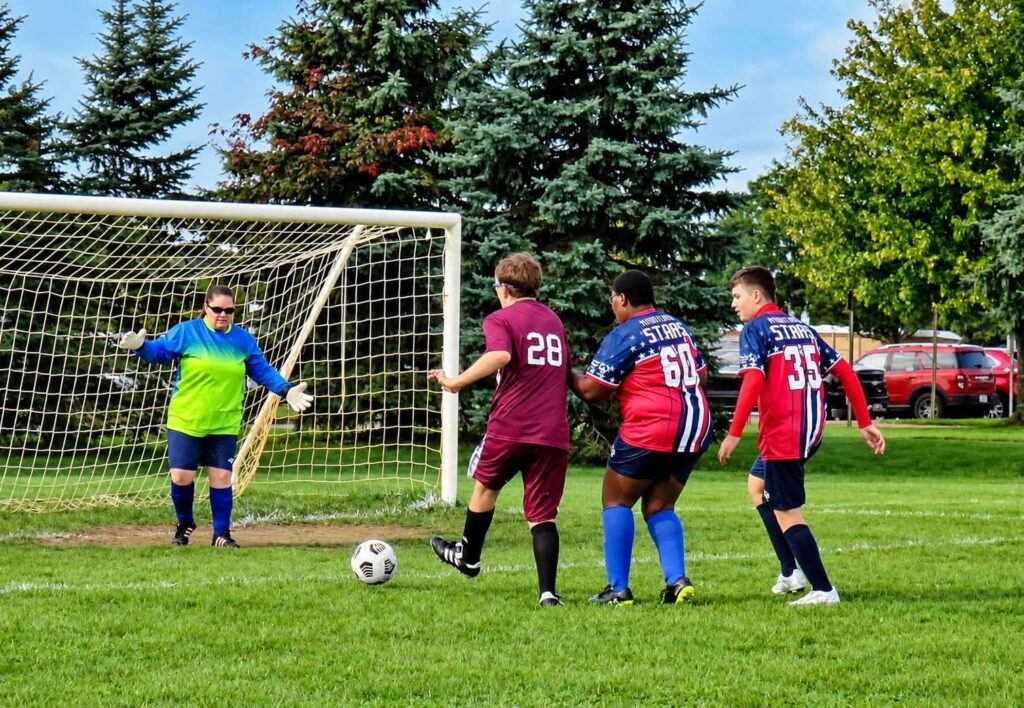
“In fact, I’m the captain of my soccer team,” she says proudly of the Plymouth-Canton Superstars.
Just last week at the Michigan state games, the Superstars took home silver medals after a nail-biting tie-breaking kick-off. Holly was in goal when the opposing team took its final kick. She stopped it.
It’s a fitting moment for someone Judy once watched sit on the sidelines in a wheelchair, unable to swing a plastic softball bat.
Then there was the Disney cruise she and Judy took to celebrate Holly’s fortieth birthday early.
“Oh, she was hoping you’d ask,” Judy exclaims when the trip comes up.
Judy was nearing 80 when she drove them to Florida. She packed Holly’s medications and medical documents and planned for what they would do if Holly had a seizure on the road or at sea. No Direct Care Worker was available to join them. Judy admits that driving alone with Holly makes her anxious, but they made the trip, and Holly was delighted to talk about it afterward.
Asked what self-direction means to her, Judy answers, “For me, it would mean less anxiety.” She knows someone she trusts can be there for Holly, including when a quick decision matters.
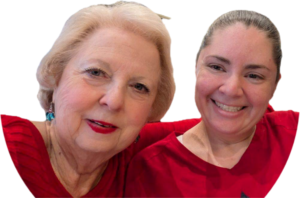
As for the future, Holly is looking forward to dance classes and another Special Olympics basketball season. “I’m happy with the way things are now,” she says.
Judy thinks about what she would tell herself ten years ago, when she doubted Holly’s seizures could ever improve.
“I guess I would say there’s hope.”
It is a message Holly has learned to live by, too. After a lifetime of seizures interrupting school days, family milestones, sports, travel, and ordinary routines, Holly refuses to let epilepsy define the life she gets to live.
Her motto says it best: “I have Epilepsy. Epilepsy doesn’t have me.”